Sharon, North Carolina
“It’s pretty crazy living conditions here because of the hurricanes and the floods we’re hit with each year, but I live here because I like to feel exhilarated.”

Born: Outer Banks, North Carolina, USA, 1956
Mother tongue, American English
Grandchildren, Lilyauna, Wesley, Aurora
They call her, Grandmother
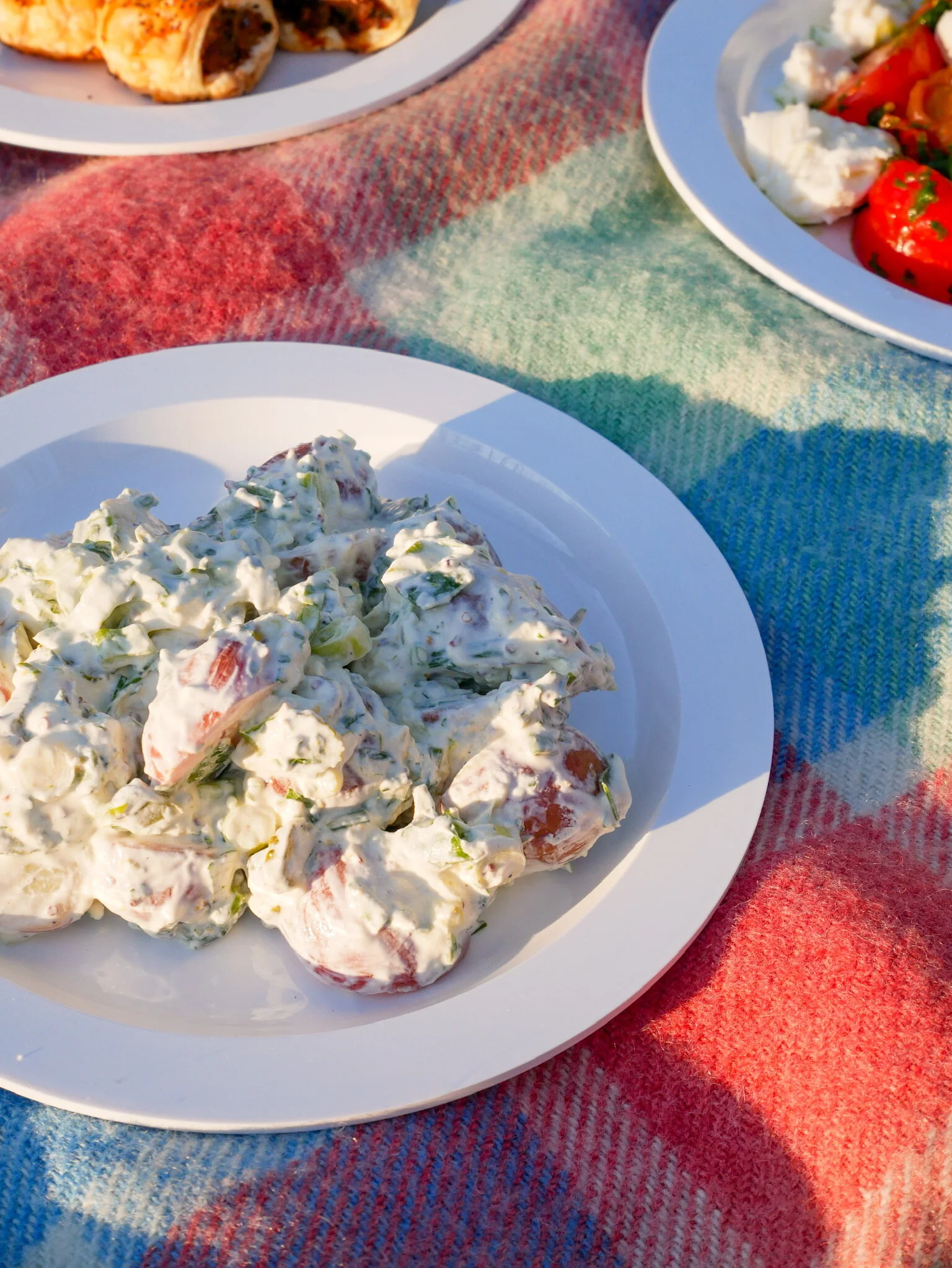
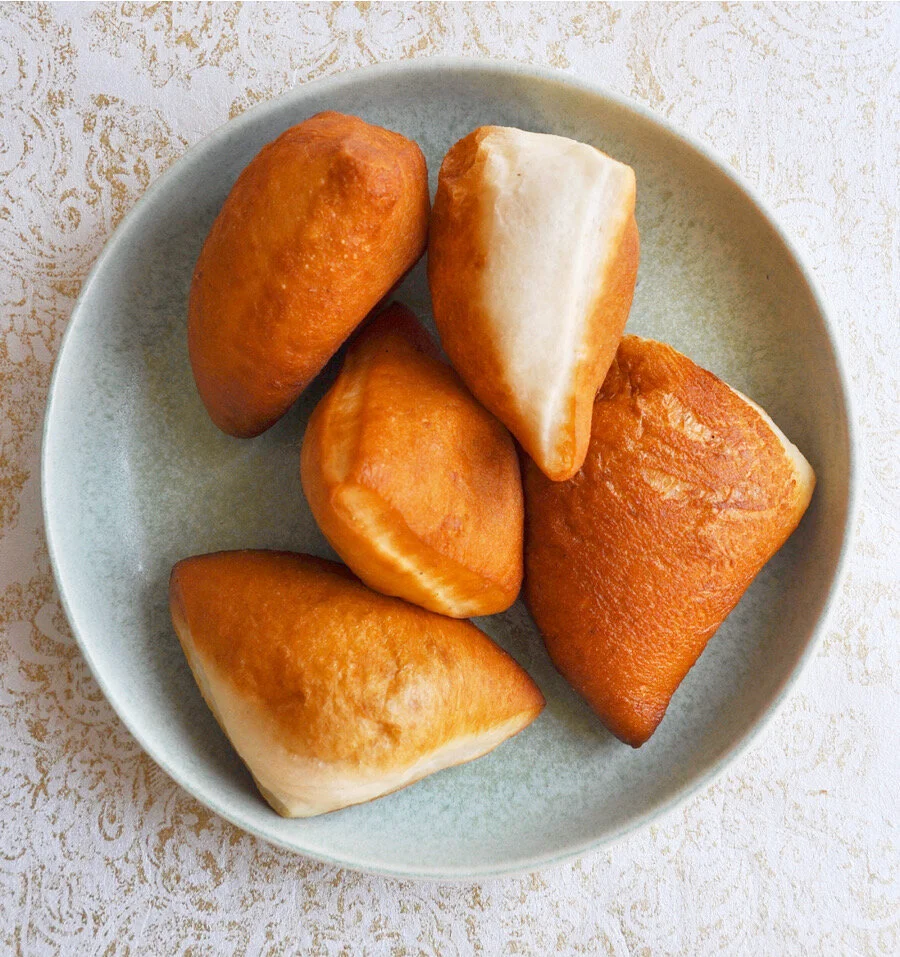
One of our little laughs is that we’d rather have a foot of tide here in the Outer Banks than an inch of snow. Hatteras Island is where I grew up. It’s the most eastern point of the whole of the USA and we’re famous here for the sheer amount of ships that have met their end on these shores.
My dad was a fisherman and we grew up on seafood. As a young child, stewed shrimp was always so delicious. I learned to cook with my father and his mother, my grandmother. This was her recipe to begin with and has been passed down to me. We make this stew because it makes sense in this part of the world. People come here to Hatteras from all over to fish. I’m only just now learning how to make meat dishes. I crave a clam and a shrimp more than I ever have a fried pork chop or a hamburger.


Hakima, Morocco
“I remember back in the day my mum would hide the apples from us because she knew we’d eat them right away if we found them. We used to just follow the smell. Here, the fruit doesn’t have that aroma.”

Hakima
Born: Casablanca, Morocco, 1968
Lives: New York, USA
Mother tongue: Moroccan dialect
Grandchildren: Verdaus, Mohammed
They call her: Nani
I’ve been doing this food since I was 12. It’s a tradition from Casablanca in Morocco, where I’m from. My grandmother and my mother taught me a lot of the dishes I know best but my father was a special man too. Even he taught me how to make specific couscous. Once when my parents fell out, my father learned to make couscous just in case he was left without his dinner again.
I’m really not into measurements. I use my eye and my hand to feel the food. Everything I do, I do it with feeling. It means cooking with your heart rather than being too prescriptive.
I’ve been in America for 22 years. I needed to challenge myself. I had a good job and a good life in Morocco but my friends kept telling me my mind and rebellious attitude did not belong in Morocco - they said I belonged in the USA. I was quite arrogant at the time, I think.
I was born on Valentine’s day but I think its the curse of being born on that day, because I really have not been lucky in love. I found love once but I think the timing wasn’t right. I do have two children though and beautiful granddaughter and grandson in Morocco.
Where I’m from, we don’t ever serve just one dish. If you’re invited to my home in Morocco, I would really not ever serve you just a single thing. We really lay on a feast for you. We love to serve main dishes and then side salads and lots of side dishes. This eggplant salad is just a tiny part of a huge feast I would make for guests.

My mum used to make this recipe but I never liked the way she did it so I had to find my way. I always have my own take on dishes. I like to eat and enjoy the food I’m eating and I want to serve people the food I love to eat.
I go back to Morocco every two years for a month. I miss the fresh vegetables and fresh fruit the most. There we eat everything in season. It’s not like in the USA where we can get hold of everything and anything all year round. It tastes better when it’s seasonal. Now is the season for the zucchini, carrots and apples - the smell is insane that comes from them. I remember back in the day my mum would hide the apples from us because she knew we’d eat them right away if we found them. We used to just follow the smell. Here, the fruit doesn’t have that aroma.
I’ve tried to assimilate and make friends here but I find it so hard. I’m too honest I think. People can’t take how direct I am sometimes. If I am your friend, I have to say when something offends me or when I think you’re doing something wrong. I have to say it when I see something that isn’t right. I live my life with a lot of honesty. The people that have come and gone in my life are the people that wanted me to tell them what pleases them - and I didn’t.
The reason I left Morocco was I needed something new. Everyone warned me it would be overwhelming but I grew up in Casablanca. It’s the financial capital. All the buildings were big there and I came from a huge city. It wasn’t an enormous change for me.
When I came here I thought, hmmm what the hell? I’ll see what happens. So here I am.
Turmeric and ginger are the most important ingredients in Moroccan dishes. We seem to use these two all the time. I also have some things I just make my own. Like aged butter, which gives the food a real kick. Or I preserve my own lemon rind, to use in certain dishes. In Morocco all use buttermilk, adding add salt and oregano to it. We leave it in a ceramic container and leave it for as long as possible in a cool place. The darker the colour, the better it is. It doesn’t go in the fridge.
The Moroccan cooking can’t be found anywhere else. It stands out beyond all Arabic countries. It’s so special and unique. It’s the second best food in the world after french - according to the experts. I think French food is so boring but people who rate food say it’s the best. Anyway, according to them, Moroccan is second best in the world. I’m happy with that.

Maral, Azerbaijan
‘I’m from a family where every member knows how to cook the entire animal from head to tail.’

Maral
Born: Azerbaijan, 1958
Mother tongue: Persian
Grandchildren: Olivia, Megan, Adrianna
They call her: Baba Maral
I’m from a family where every member of my family knows how to cook the entire animal from head to tail. It’s so important not to waste when it comes to food. We’re from the mountains in Azerbaijan. It’s so beautiful there that you can hear the voice of the river as you sleep. Mostly we grew our own vegetables and had cows, sheep, chickens. It’s so different now, though – it’s become a ski resort and a place for tourists.
I collect all my tea from Azerbaijan when I go home for four months in the summer. When I was a little girl, my mum would take us into the forest and mountains and she would show us which herbs to pick so we could forage ourselves for all of our teas. I now bring so much back with me from Azerbaijan. I don’t even know the name of some of the herbs I bring back with me. It’s so important to have the ingredients I know and love from my home.

When I was in Azerbaijan I worked as a midwife, and then a nurse in Siberia, then I became a dermatologist. I married and had two children, but my husband left me for a young Russian student. That’s when I took my two young daughters and moved to America to start from zero at the age of 41. I did any job available – cleaning peoples’ apartments. Anything. Then I finished college here.
My husband came back after 20 years to ask for forgiveness. I told him, ‘I forgive you, but I don’t need you.’ The truth is I never loved him and I think that’s what pushed him away. I don’t know how I lived with him for 14 years, to be honest.

If you’re not scared and have a goal inside you, you can do anything, anywhere. You just need to go straight on and never look back. I didn’t speak a single word of English when I came here. I never had any idea that I would be living in Brooklyn in New York City and that I would need to speak English. I learned within five months, though. I had a technique, which was to speak to everyone.
When I took the train I would speak to the person next to me and ask them, ‘Speak English with me?’ I would say, ‘Please you tell me if I say wrong,’ and they would, so that is how I learned. From Washington Heights for an hour and a half to my home, I would talk to everyone. Can you believe? I had the same conversation a hundred times. If you want to talk, you have to talk with people. You’re not supposed to be shy. If you want to learn a language it is no use doing the book thing.

I’m fast; I always want to learn. I attended college along with my daughter and studied biochemistry. I just don’t stop, ever. I’m always moving and doing things. You told me ‘cook one recipe’ today and I’m making six dishes. It’s just something in me. I like to keep busy.
I love to cook. I always have guests over to share my dinner table with. My mother and father always had people over too. If you came to my father’s house, we would have a huge table for 40 people. The men would prepare the sheep for the slaughter and the women would be cooking.

Jean, Jamaica
‘You have to learn to be creative when you have five children. I would never let my kids go and buy sandwiches for school. It was ackee and saltfish and fried dumplings.’
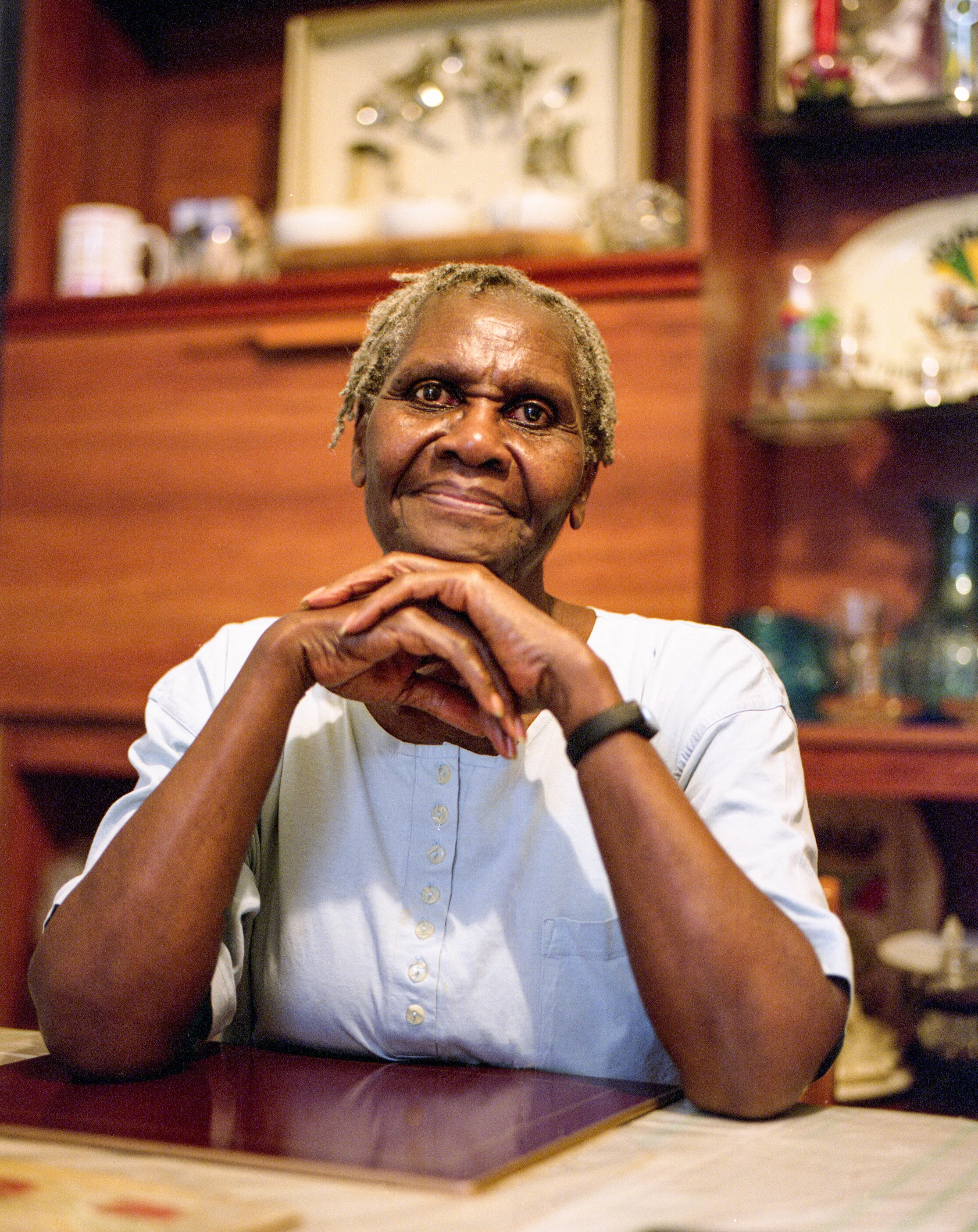
Born: Jamaica, 1943
Mother tongue: English and Patwah
Granchildren: Sheldon, Charise, Shaunna, Sherelle, Cheniell, Yasmin, Shae, Cyon, Jade, Jentae, Jeihim, Juranuel, Neriyah
They call her: Nan
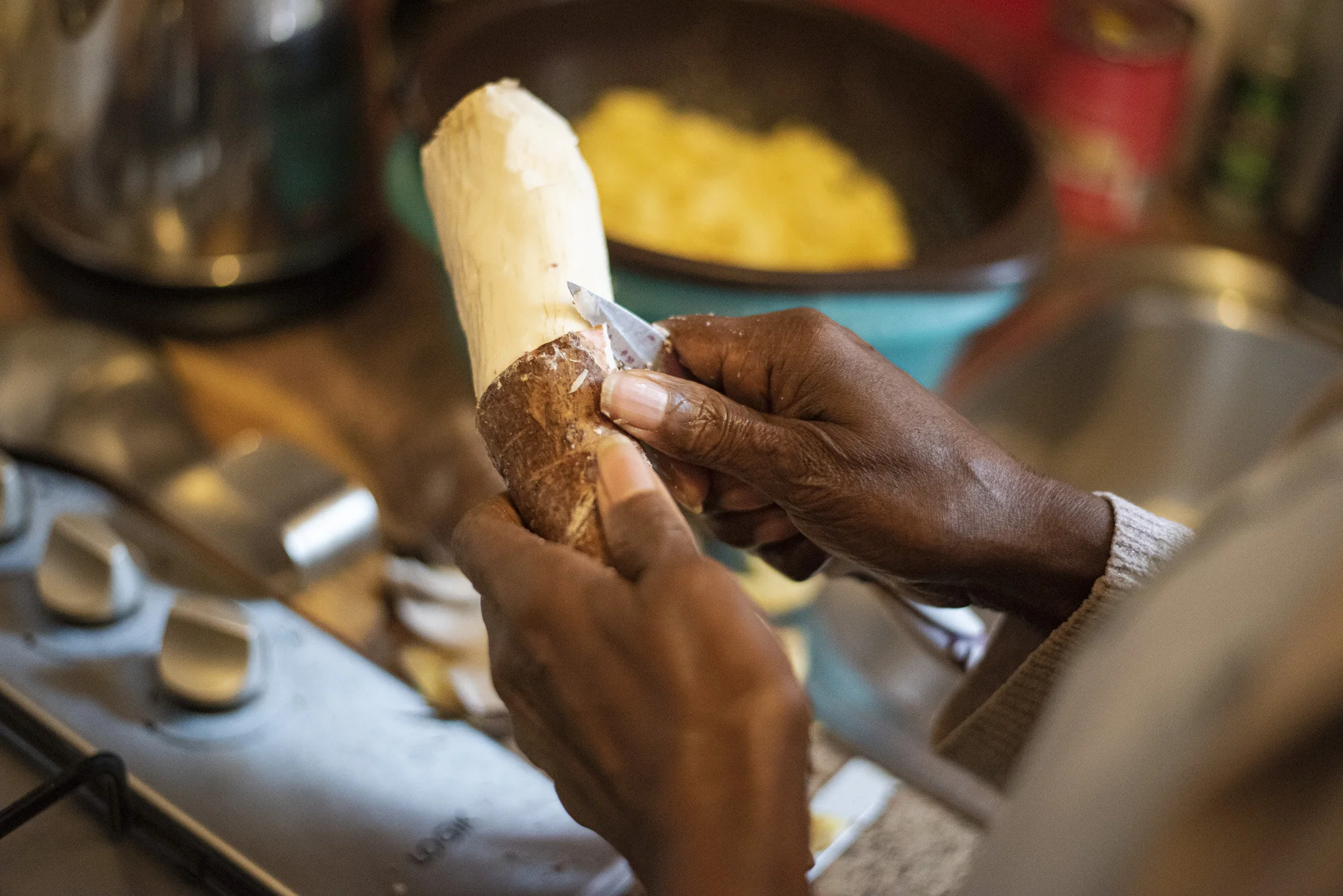
This is a traditional Jamaican dish that instantly takes me back. It takes me back to that island and to the smells that hit you over the head coming from people’s homes. The original is with saltfish, but I’m vegan and have been a vegetable convert for quite some time now.
The reason for this was that two years back I was diagnosed with breast cancer. Of my own accord, I decided to change the way I eat. I cut out dairy, meat and fish. The fish really was tough to resist when I went back to Jamaica last year, though. Back home, the fish we have is fresh – just come in from the sea – so it’s really delicious.
Still, if I don’t look after myself, no one else is going to do it for me. So I say no to fish, and lots of other things. Cancer feeds on sugar, so I’ve cut that out too. If the family comes over, I’ll cook chicken and fish for them but I don’t eat it myself. My kitchen might be small but I do manage to do a lot of cooking in spite of that.
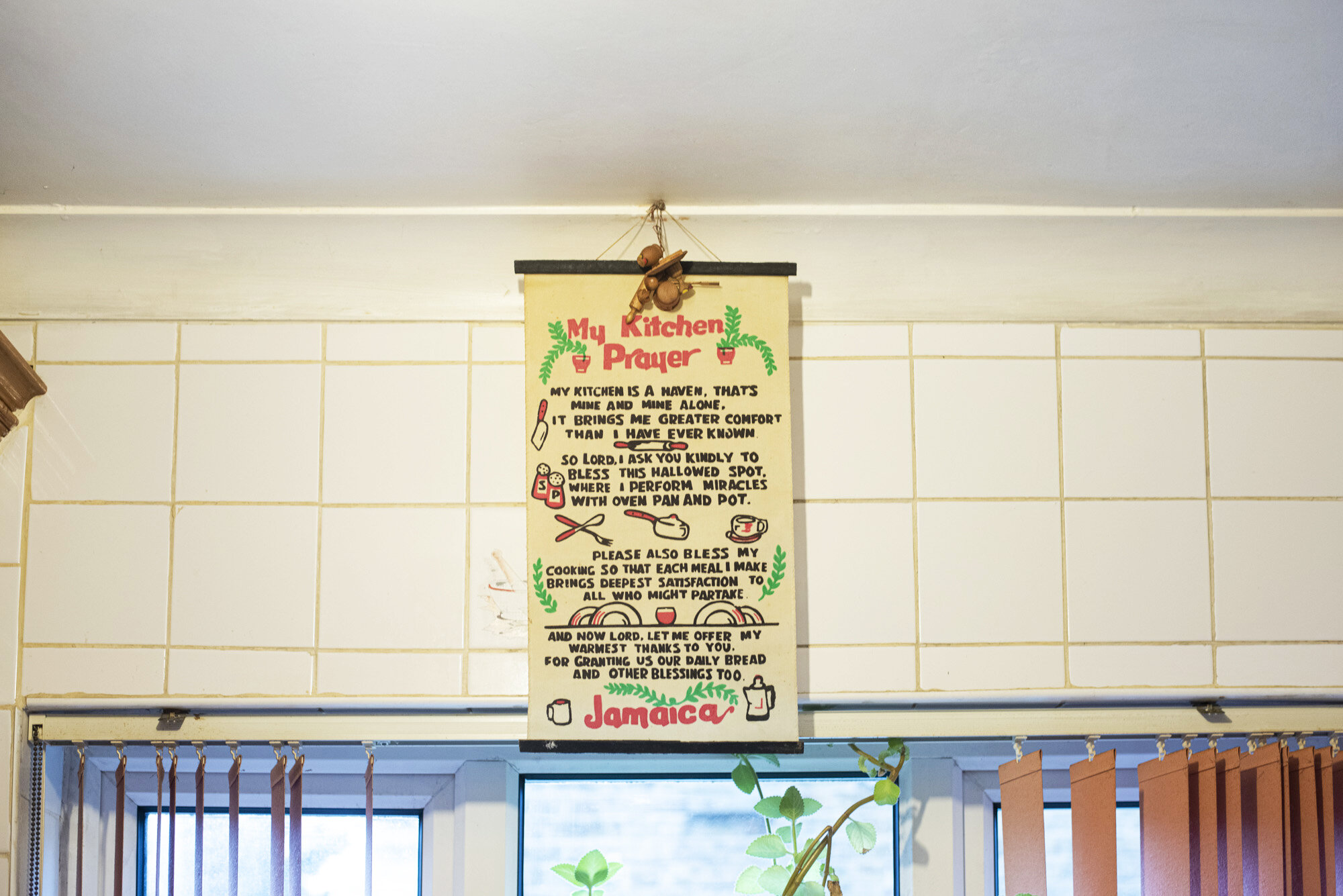
I like to experiment with my cooking. I try my best to be healthy, and even cake that I make I come up with my own healthy recipes. I use dates and coconut oil to make sweet cakes. You have to learn to be creative when you have five children. I would never let my kids go and buy sandwiches for school. It was ackee and saltfish and fried dumplings. I would make homemade pizza too. It’s so important to use ingredients in their purest form. That way we know exactly what is going into our bodies.
Church is also a big part of my life. I’m a Seventh Day Adventist, which means on Friday evening to Saturday evening, I don’t do a thing (like cooking of cleaning). We believe that Jesus is the Son of God and that he is coming soon, as the King of Kings. The Bible clearly states that this will happen. My children don’t believe in church, but I do tell them the Lord is coming soon. They just say, ‘OK, OK, Mummy.’ The grandchildren came with me until they became a bit older.
I arrived in the UK in 1962 from Jamaica because my sisters were here. They sent for me to come and painted such a picture of England. You know, there was all this talk of Buckingham Palace and so, growing up in Jamaica, you think everyone in England lives in palaces. Everybody was coming at the time. It was exciting. I came by ship and shared a cabin with six other girls. I rather quite liked that three-week journey. I just remember arriving and thinking, Is this it?
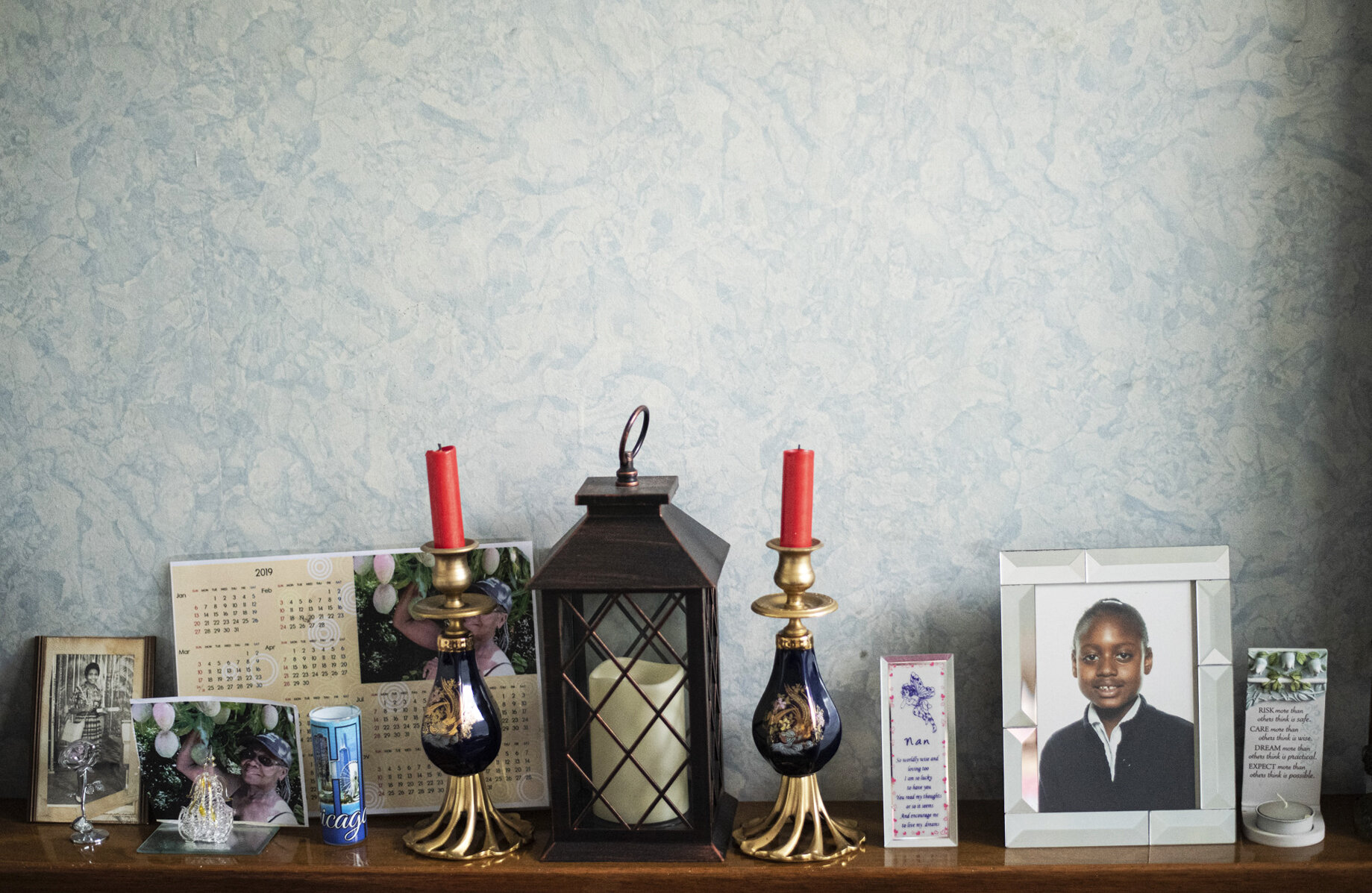
I came in April and I saw the fog and all the grey as we approached and I really wondered what I had got myself into. My sisters told me nothing about the weather. I had just been fed this fantasy about palaces. Back in Jamaica, we were under colonial rule and so we were all very impressed by this great empire. All British people living in Jamaica had money.
Most of them were diplomats and they had maids, gardeners and so on. We genuinely thought we’d come to England and have that. I could barely believe white men swept the streets when I arrived in London, because in Jamaica all the white people were so rich. We thought all English people were incredibly wealthy. It didn’t matter too much though, because I was well-received and I settled into a community here. That means more than wealth to me.

Shewa, Eritrea
“Tomorrow, you don’t know what life is going to bring and what is going to happen to you. Whatever is going to come is going to come. You have to embrace it.”
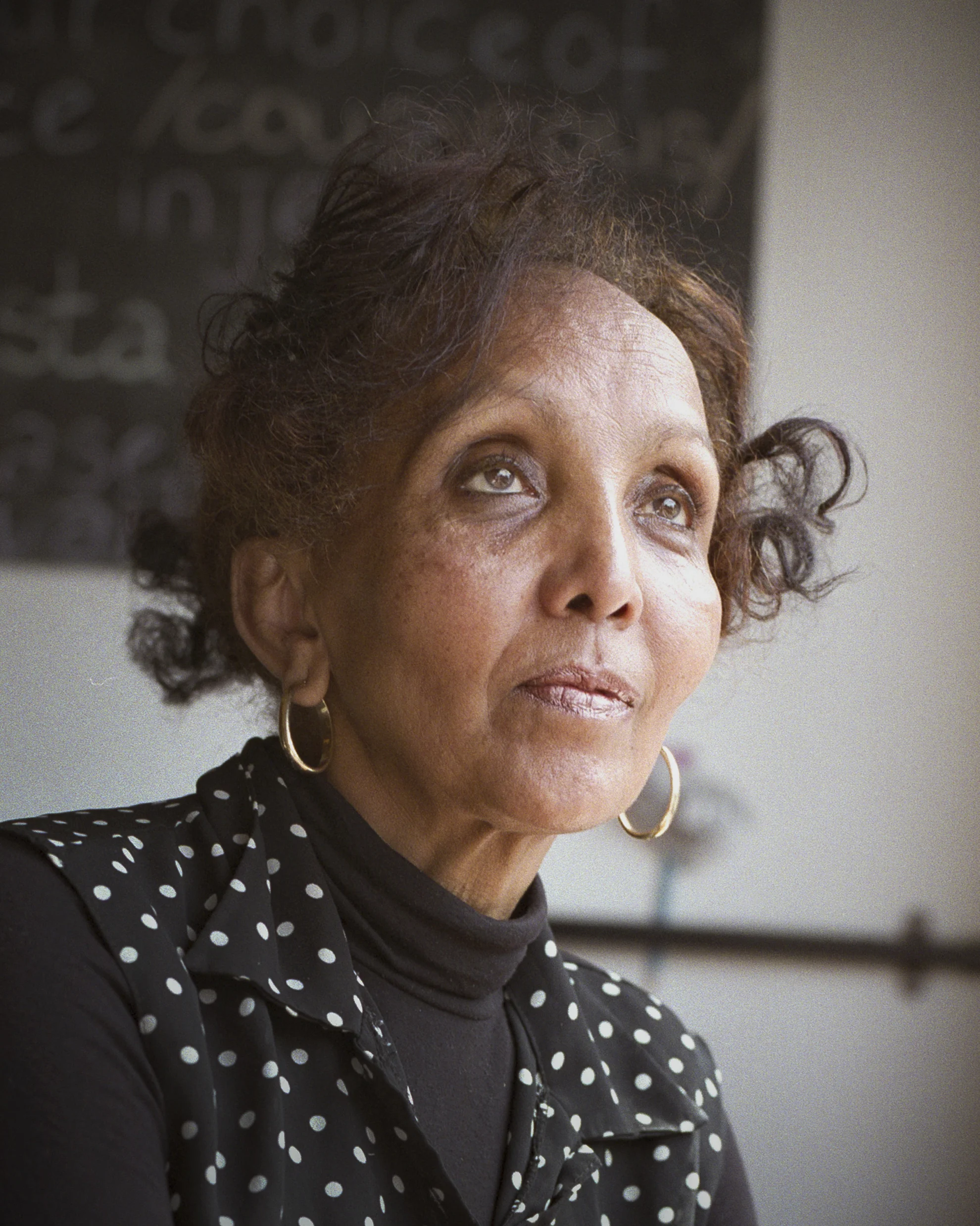
Born Ethiopia, 1958
Mother Tongue, Tigrinia Amharic
Grandchildren, Same, Zoe, Noemi,
They call her, Abayeye

Food is important. It’s like fuel to a car but we shouldn’t be too obsessed about it. As long as you have something to eat, that’s the important thing. Being from Eritrea and having lived in Ethiopia has shaped how I see food. When my boys were younger and would ask what we were having for dinner, I would say, “We’re going to eat food,” not list their choices. There are so many mothers and grandmothers who can’t feed their own families in this world that we should respect food and be happy with what we have.


Chula, Thailand
‘I don’t get stressed when I’m cooking for lots of people, I’m happy. Being a good hostess comes from inside of you.’

Chulalaxana (Chula)
Born: Bangkok, 1950
Mother Tongue: Thai
Grandchildren: Arabella, Mimi, Dolce, Murphy
What they call her: Grandma
I taught myself to cook when I was living in Hong Kong and working as a flight attendant. I was just 25 and we had to cook for ourselves in our free apartment. I would ask Chinese people on the roadside to show me how to cook fried rice in the Chinese way.
At the time I was working as a flight attendant for Cathay Pacific. There were only 25 Cathay Pacific Thai girls. There were more than 1200 applicants and I was one of the 25. I was so proud of myself. Of course I had a lot of makeup on but I was a model at the time. I think I got the job because of my smile - I gave big smiles to everyone because I didn’t know what else to do.
I was so happy and I came back home to tell my mother and my father I got the job but they weren’t happy. They said, “What’s wrong with you? You have four maids at home! You don’t have to do anything at all.”

I told them about all the other applicants and how I’d beaten them, that the Cathay airline uniform was designed by Pierre Balmain and that I wanted to travel. They didn’t want me to be serving people. I got accepted for three airlines but Cathay was three times the pay. We would have breakfast in Hong Kong, lunch in Singapore, dinner in Jakarta, Indonesia overnight then Sydney for two days and then come back. The first time I did this I slept for a full 24 hours after.
Contrary to my parents’ beliefs, flying was so glamorous back then. Everyone was smoking on the plane (now I think that’s disgusting). I had a cigarette holder. Can you imagine? Mostly we served steak. Lavish dinners. Everything was ready prepared. I just had to warm it in the galley.
I don’t get stressed when I’m cooking for lots of people, I’m happy. Being a good hostess comes from inside of you, you have to love cooking and want to share your made-up recipes. That’s why I host young Thai students who are at boarding school here in the UK. I’m the second guardian for the Thai Embassy and so once a month, these children - sometimes up to six - come to stay with me for the weekend. I cook them Thai food. The first student I had was 8 years old and he just sent me a business class ticket to come to his wedding. It’s like being a grandmother a second time around to so many children.

Six years ago I got breast cancer. I had a mastectomy and changed my diet to be more healthy and I began making up my own recipes. I use brown rice or if it has to be white, then I use basmati because it grows with minerals. If I make Pad Thai I never add sugar and I slice carrots to use instead of the noodles. Sometimes I slice raw papaya instead of noodles. People love it. Most people in Bangkok eat beef and pork Penang but I prefer fish. That’s why I am making you salmon penang. I tested all different kinds of fish like plaice and halibut for this recipe but salmon is the best.
When the cancer came, I thought I was going to die. I had six rounds of chemo. The third and fourth were horrible and I couldn’t eat anything at all. It took me half an hour to eat one teaspoon of plain rice. Even water was very bitter tasting. Then one of my doctors said, “Ok Chula, if you cannot drink water you must have ice cream.” I swear I survived on chocolate ice cream and pineapple juice.
I’m healthy now and I think, just be nice to people because you don’t know when you’re going to die. Try and do something to make people happy. It’s why I make my healthy Thai recipes - I have about 20 and I share them with people who come to my home.

Tinh, Vietnam
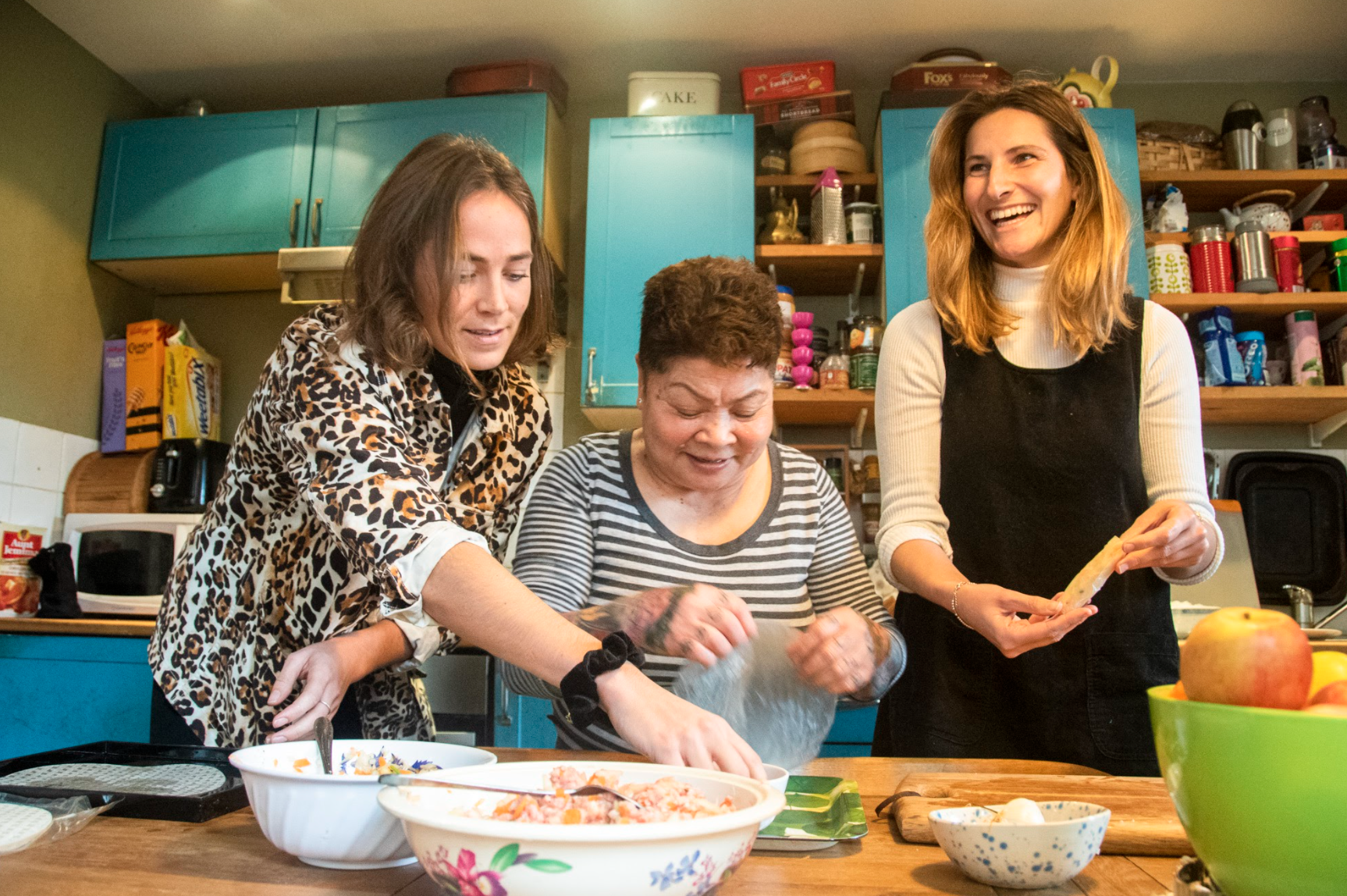
‘Every tattoo I have symbolises how I was feeling at the time. It’s an expression of my entire life. These tattoos make me really, very happy.’
Born, 1948, Hanoi
Mother tongue, Vietnamese
Grandchildren, Joseph, James, Calypso, Alfred, Edward
They call her, Ba Tinh
This dish is eaten in Hanoi where I’m from as street food. My mother taught me how to make its become ever-present on the family menu. I even did it for my children’s packed lunches at school. The key is to use all the coriander, including the stalks because they hold the most flavour.
In the eighties, thanks to political unrest in Vietnam, I was forced to flee from my home in Hanoi. My husband was Chinese and there was conflict between Vietnam and China at the time. We may well have been subject to ethnic cleansing if we had stayed. So we became part of the boat people migration that happened across the late seventies and early eighties.


Part of me honouring my new self without my husband were these tattoos. I got my first one when I was 60. My first tattoo was an enormous one on my back. Since then I’ve had sleeves down both arms and legs. It was an affirmation that, ‘you know what? This is who I am and I don’t care.’ Every tattoo I have symbolises how I was feeling at the time. It’s an expression of my entire life. These tattoos make me really, very happy. I’m more myself now, in my old age, definitely.

Ester, Haifa
‘Cooking is important because it is a preservation of your tradition. It isn’t just for the sake of putting food on the table for our loved ones, but for remembering our mothers and our grandmothers.’

Ester
Born: 1950, Georgia
Mother Tongue: Georgian
Grandchildren: Roni, Yuval, Tomer, Maya, Tami, Jossi, Odel
They call her: Bebi
I came to Israel when I was 21 and left my mother behind in Georgia. It was only then that I started to cook. I had no need to before that because my mother would take care of everything in the kitchen. It was just from watching my mother deliver these incredible feasts on a daily basis that I gleaned my culinary know-how. This dish was one my mother would make often and it reminds me of the home I grew up in. I’ve never been back to Georgia since I left. What was my home city has now become a part of Russia. It no longer exists, sadly.
Cooking is important in life because it is a preservation of your tradition. It isn’t just for the sake of putting food on the table for our loved ones, but for remembering our mothers and our grandmothers. It was crucial to me to cook as my mother did so that I could feel her closer to me. I also want my family, my children and grandchildren to really know Georgian food. When I cook Georgian food, my past comes to me and the people from my past, too.

I was just twelve when I met my husband and he was twenty. I know this is not the done thing now. He wanted me a lot more than I wanted him. In fact, I threw an entire bottle of water on him when we first met and he made clear his intentions. I was far too young, so at the beginning I really didn't want to get married. He was handsome but I wanted to go to school. Still, it was really essential for me to marry another Jew and my family were happy with him, so that's how it happened for me. He had just seen me and then asked my father for the OK. Our family were very religious.
I didn't end up going to school, of course. Let's say I attended the school of life. I was cooking for a family in my early twenties. I was just lucky to have found someone that was as sociable as I am. Alexander loved travelling and having guests over. He kept life interesting. When he died, the lights went out for me but I am trying to live on. I keep cooking and working and I just keep going for the family.
When I moved from Georgia to Israel, it was just my husband and I. I felt completely alone because we had to leave everyone behind. The ideology was what brought us here, the idea that finally there would be a place where we would “belong”. The Israeli dream. We were excited to come but on arrival, it was not what I expected.

I came from a communist country to a capitalist country and it wasn't what I was used to. We started absolutely from scratch and had nothing. We were rich in Georgia but coming into Israel, we couldn't bring anything with us. My gold and any valuables were all left behind. The Georgian government wouldn't allow us to take anything with us. It was a communist nation and what we had earned in the country, we had to leave behind. It was so mentally challenging to go from running a restaurant and owning a business to having nothing.
When we arrived, my husband worked as a builder, laying the roads of Israel. It was very hard work and we went from being very rich to incredibly poor. We knew it would be difficult but we didn't imagine just how many financial difficulties we’d have in our new, promised land. I also only knew a couple of words in Hebrew. At the time, the Jews that came in from Europe were the best Jews in the hierarchy and those Jews coming from the middle east were seen as the lowest level of Jew. It's still very much like this now. The Europeans are seen as better. I really do believe that love, respect and kindness are the most important characteristics a person should have in life. We could all do with a little bit more of each.

Edna, Tel Aviv
‘The most important thing in life is to have good relations with people, which isn’t easy. Everyone has their own character but we can’t depend on only ourselves. It’s hard here because it will never be a love story between the Palestinians and the Jews.’

Edna
Born: Bucharest, Romania, 1931
Mother Tongue: Romanian
Grandchildren: Shira, Maayan, Rotem, Yuval, Amit, Itsan, Hagar, Neta, Adili, Ido, Boaz, Brit
What they call her: Sabta
This is a dish I like to make because it’s simple, easy and instantly reminds me of my childhood growing up in Romania. It’s usually something we will eat as a starting dish or as an accompaniment to a main meal and it’s really very typically Romanian. We can use green and yellow bell peppers too for this - I just chose red for today.

We didn’t like it so much in Romania because we were Jews and it was a hard time because of the war. I was just a little girl when we left for Palestine, towards the end of the second world war. When we arrived it suddenly struck me that everyone was Jewish. It was nice to finally belong. Nobody was going to call us names or be racist towards us, finally.
In Romania we suffered a lot of prejudice, even being from a good family. My father had a factory for printing silk and we were less endangered than other Romanian jews because we were from a well-to-do family.
It was when we were moved from our mixed school to an all-Jewish school that I began to notice the changes that were happening around me. I was just a girl but it was impossible to ignore the names that they would call us. We came to Palestine because we thought that we would like it better here and we were lucky that we had enough money to afford an apartment and go to school. It was also very smart of my parents to ensure I learned Hebrew before we came to live here.
I wasn’t afraid of leaving Romania but I was sorry about leaving my friends. It was lucky that we were young and could actually adapt to a new life and culture. Tel Aviv was built then and I lived in a city from the start so the city life didn’t scare me at all.

My mother knew to cook very well and she cooked what she would usually make for us in Romania, including these marinated peppers. When she didn’t cook, she’d send us to a chain of stores that sells dairy products just below our apartment and we’d go there and have puree of potato with an egg. I remember they’d cook the egg so that part of the white was done and the other part was not done. It was not good.
I can crochet, I can sew, I do ceramics, I can make shoes, I paint and do glazing and enamelling - I’m very into crafting and I’ve taken many courses. I knit almost every day. I can’t live without doing something. It may be what keeps me going. I think my husband is the reason I feel young. I always told him I’m not your mother, I can’t cook like your mother, but he has always eaten everything I make and is happy with my food.
When I was 17 I met him on a Kibut, which is basically a commune we’d gone to work on for the summer. I had this old camera I’d had since I was 12 and he made the first move by asking if he could play with it. I gave it to him and he played with it for ages but I didn’t mind because I liked him. I still have the camera, actually.

He was a nice man - a real man - and I liked him from the beginning. At the Kibut we were put in the same group and the sleeping arrangements were very relaxed. Boys and girls all slept in the same room together so on the first day he asked me, “Where do you want to sleep?” I said, “I don’t mind.” So then he responded saying, “Maybe you sleep there and I sleep here then?” and pointed to two beds next to each other. And so we did. We didn’t touch at all but the whole time I could feel he was next to me.
No-one believes how in love we are all these decades later. I love him exactly as I did when I was young. He’s a special man. He’s just something out of this world. I don’t know what the secret is but we never parted. I still want to embrace him and to kiss him. We are in very good relations. All I know is that if you don’t compromise, you don’t move forward. You must also look for an honest man that loves you. You just feel it. I can’t explain it in words but the feeling sticks to you. I really do love him today like I loved him the first day.

The most important thing in life is to have good relations with people, which isn’t easy. Everyone has their own character but we can’t depend on only ourselves. It’s hard here because it will never be a love story between the Palestinians and the Jews. It feels like it has been like this a long time but we are trying to live together peacefully and not be fighting all the time. What we see on the news doesn’t seem to translate to the Palestinians and Jews here that really do live alongside each other as neighbours.
Try Edna’s Pickled Peppers recipe here
Many thanks to Frank London and Visit Tel Aviv for facilitating our trip out to cook with Edna and grandmother Ester.

Rajni, India
“My family were rich and we had servants where we lived in Tanzania. Here, I learned to work hard for everything.”

Born, Tanzania, 1939
Mother Tongue, Kutchi
Grandchildren, Ria, Sonia
They call her, Dadi

I keep my mothers alive in my food. My own mother made savouries like no one else and my mother in law, she is in my sweet dishes. We show our love for our children by cooking. Before the grandchildren visit, I ask them, ‘what can I make for you? What do you want to take home with you? You call me in time and I make it for you to take it back.’ They call me and they say ‘Dadi this is finished now’ and then I make it for them straight away.

.


Dora, Sicily
‘I find it funny when I see chefs weighing out ingredients. I don't use recipes. I just know what ingredients work together, use my hands or eye to add them, and then I taste until I know it's right.’

Isidora (Dora)
Born: Giarre, 1953
Mother Tongue: Italian
Grandchildren: Laura and Sofia
What they call her: Nonna
I lived with my grandmother from the age of three months. When I was 8 my mum emigrated to Australia to work at a restaurant opened by my uncle. There was no money to be made in Sicily at that time and many people left Sicily for America, Australia or Germany. My mother didn't return to Giarre until I was 17.
I had a sister but she is dead now. We were divided when we were little because she was younger and so she went with my mother to Australia. We became closer when we got married.
I am good at cooking because of my grandmother. She cooked with passion. It was effortless. I remember the smell of her making bread and her making Pan di Spagna. Everything was homemade.

After school girls in Sicily went to study stitching in a religious institute, which is what I did. Then I fell in love with my husband at 16 and we were married by 17. I liked him because he was funny and kind. Next year you must come back because we will celebrate 50 years of marriage! It's important to have a lot of patience in marriage. But mainly love. Love is very powerful. After some years it changes to a friendlier love - the same strength but with a different face.
When my mother came back to Sicily she opened a casual restaurant and I went to work with her. We made arancini, pasta al forno, rotisserie chicken...it was the first restaurant like this in Giarre. My mother was a business woman, she was very clever and hard working, while my father was more laid back.

My husband eats everything but is very particular about the quality of his food. He loves my classic sicilian sugo in the winter. First I cook big pieces of veal. After it's cooked I add pork, chopped up sausages and meatballs. It cooks for at least three hours with tomato sauce. The special ingredient is my homemade Vino Cotto - cooked wine - which has a very particular, rich flavour. It's made by boiling muscat wine with grape vine ash, which is then sieved reduced down again into a thick syrup. I learnt this from my grandmother. Four litres of red wine boils down to about one litre of vino cotto.
My grandmother was a remarkable woman. 15 days after her youngest child was born, my grandfather died, so she was left alone with 6 children. First thing she did was sell all the bedsheets. When couples marry in Sicily it's traditional that the family prepare the 'corredo' or 'kit' for them - towels, pillows, sheets and things. After she sold her own, she started buying and selling more and more and turned it into a business. She did lots of research to find the best suppliers and embroiderers.
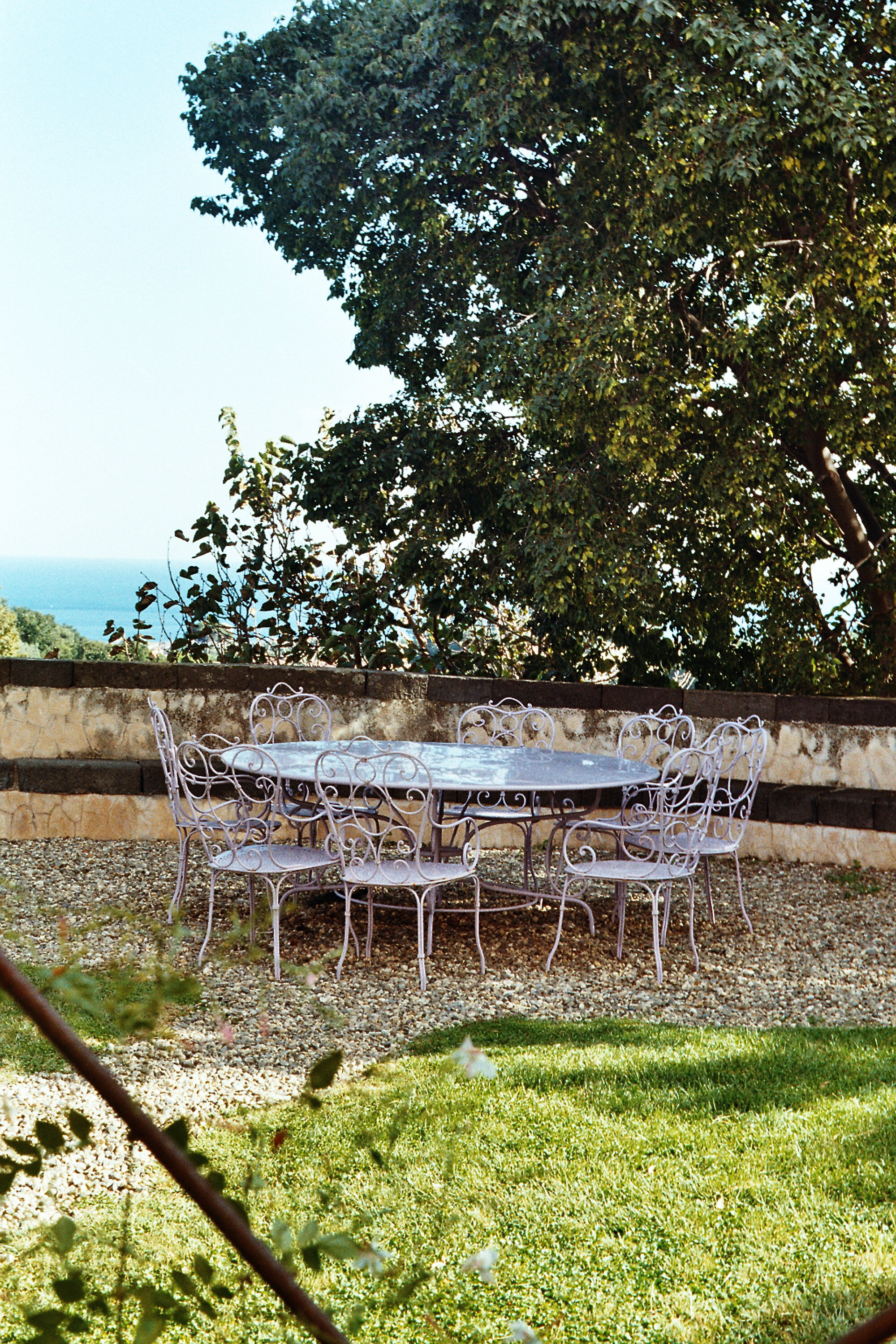
After this business, she opened a little supermarket. But one year business went very bad. There were lots of customers buying on credit and they couldn't pay it back that year so she had to close the shop. This is when my mum went to Australia.
My mother's restaurant in Giarre was a great success. I worked there with her until I was about 35. But in that time more and more restaurants like this opened and in the end my mother decided to stop. So I started catering, from my own house. All Sicilian food - it's all I know.
I left Sicily for the first time last year to go to London and cook for journalists so they could have a taste of the villa. It was very loud and very cold. But we had fun. I didn't have all the equipment I was used to - like a meat slicer. But they found one for me.

Coming to cook at an international villa here was a big challenge. I knew sicilian recipes deeply but when I came to the villa I was a bit scared. I didn't think very much of myself. But the owners saw my talent and helped me add elegant touches to my sicilian dishes.
I find it funny when I see chefs weighing out ingredients. I don't use recipes. I just know what ingredients work together, use my hands or eye to add them, and then I taste until I know it's right.

Dagmar, Croatia
“Every dish you cook and make is like a painting, you start with some raw ingredients but you can end with something truly beautiful and expressive. It stirs emotion.”

Dagmar
Born: 1943, Ruma, Serbia
Mother Tongue: Croatian
Grandchildren: Giorgio, Pave, Toni, Matteo, Alma, Stella, Elia, Luče
What they call her: Baka
I’m now an old lady but I first made this dish in 1965. When I first came here, to the island of Palmizana, my husband thought he’d also found himself a cook. I really wasn’t well at all. From the very beginning, I had an awful time on the island. There was no electricity and no running water when I first arrived to live with him here. I always said the best language I could speak at the time was dog language, because the only people I had to talk to weren’t actually people, they were dogs.

I’d lived in Zagreb, was the daughter of the county Mayor and a successful journalist but I’d fallen in love. On Palmizana then, we had no taxi boats to ferry us back and forth to Hvar or Split but I couldn’t live without him. I ran away from the island five times but I realised life without him wasn’t bearable.
He was a very attractive man my husband, when you saw him, your mouth would drop open and you’d catch yourself salivating. He was a very big fisherman. He would dive for 30 metres deep with no breathing equipment and was known, after the second world war, as a champion free diver. In 1954, there was a book written about sports fishermen, and they came here and featured my husband. He caught grouper.

We started with a small generator for electricity and we built everything from scratch. Even all the cacti that populates the island, my father and I introduced because he was a botanist and brought it all back from Latin America with him. We always had fresh food on the island, because it was all that was available to us. We had to fish for fresh fish because we had no way of preserving it or keeping things for days.
So I started making Gregada because of all the fish he would bring back. Fresh fish needs as little cooking as possible. When I came here, my husband was the best cook and I learned from him, actually. We would cook it together with fishermen friends of his.

For Gregada, you must have all the ingredients fresh on the day. You can’t cook it with fish from an icebox. If you’re cooking this, ensure that your clams, your fish – everything is sourced on the day. There are not a lot of complex spices or herbs, the fresh fish and the shell of the prawns and the clams gives it a lovely taste of the sea. It’s a famous dish here for us on Palmizana. Amra, the artist staying here with me right now has even painted a beautiful painting of the Gregada for us.

I’ve had my artists friends to stay from the very start of my time here. In the winter, we sometimes would have 3 or 4 months not seeing anyone and I would get so lonely, so I began to invite my friends to stay for a month or so at a time. The island would become a sanctuary to them and they would paint. That’s why the place is filled with art. I’ve become one of Croatia’s biggest collectors, because of it. I love the way that artists have come from all over and really painted a feeling of Palmizana, most of the time leaving their work behind here on the island.

These paintings are not only paintings. People are coming here, and they’re taking soul from this place. When we all die, these works of art will remain, and that is a very nice and comforting thought. I have a similar feeling with special recipes, like my Gregada. Every dish you cook and make is like a painting, you start with some raw ingredients but you can end with something truly beautiful and expressive. It stirs emotion.


Gloria, Colombia
“I think it’s not the food itself but the sharing together that can heal you. It’s very healing to sit at the table and discuss.”

Gloria
Lives: Presteigne, Wales
Born: CÚCUTA, Colombia, 1950
Mother tongue: Spanish
Grandchildren: Paloma, Santiago
They call her: Abuela
I was a teenager when I first made this dish. I went to Bogotá in search of a different life and I went on my own. I was seventeen years old and it was actually quite a scandal in my family because at the time, people stayed with their family until they married. I on the other hand, had started saving to leave home when I was 11 years old.
It surprises me that I managed to deal with all the dangers of the city when I was so tiny. I got a little room in a house with an old lady, Doña Carmencita. I was looking for accommodation, all alone in Bogotá and I rented a room in her neighbour’s house which was like a cupboard, then she offered me a room in her home which actually was much better and cheaper.
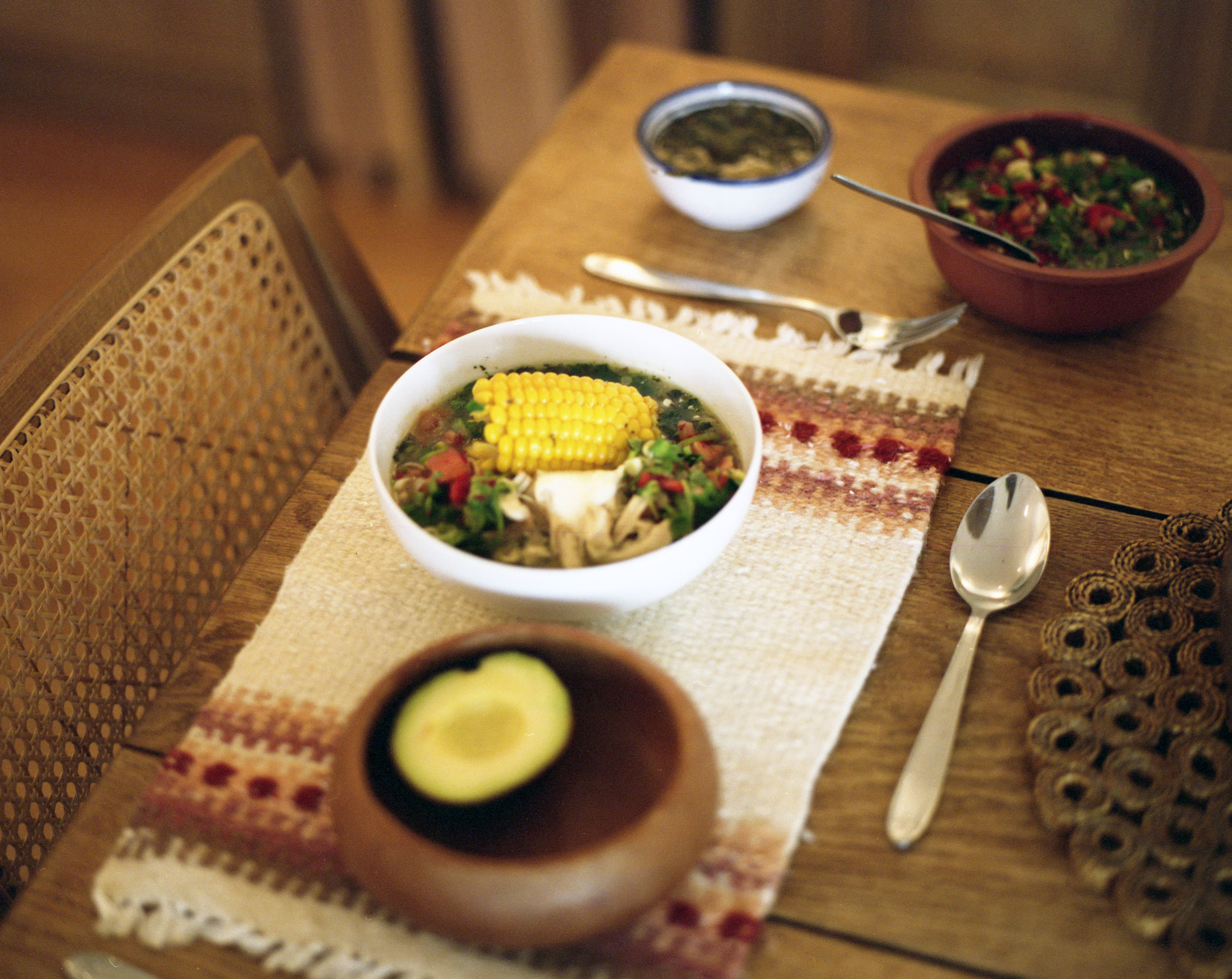
So I ended up befriending Doña Carmencita, I’d do her shopping because she didn’t walk very well. She was about 78 years old when we first met and she was the one that introduced me to this dish. When she taught it to me, she would use seven varieties of potatoes but I like to use five varieties. She would have this dish on a special occasion and would use the chickens that just sort of, would run around in the yard.

Bogotá is high up in the mountains and can be very cold when the sun is down. This soup is so warming and lovely to have on a cold night. There’s a lot of debate about the origins but for me, it’s a mix of indigenous cooking and Spanish influence. This one has so many different types of potatoes and maize, which are Colombian products. Potatoes and maize are new to Europe. We have something like 4000 varieties in south America. And potatoes - if you have a refined taste, you can really notice the difference.
Doña Carmencita was a very unfussy person with a very simple house and a wood stove. At her table she had only two chairs. Her chair and my chair. We would sit there and could easily pass three hours together. She would tell me about her childhood, and would give me advice without even giving me advice. She wasn’t an educated person but she had masses of wisdom.
What surprised me was that she also admired me - that I came into this dangerous world, worked with street children that carried knives, left the comforts of home in Medellin to be completely alone in a new city. We would really just sit and talk for hours. She would say to me, “talking is important and talking helps you get rid of what is bothering you.” It’s no coincidence I became a psychoanalyst.
I think it’s not the food itself but the sharing together that can heal you. It’s very healing to sit at the table and discuss. The thinking of how my children are going to enjoy that dish and how we are all going to sit around and talk, really is the driving force behind my cooking. And you know, the table really is an amazing place to resolve problems within families. You do it in a very informal, non accusatory way. It also gives you space to pause and listen.
When my son died at the age of 21 in a traffic accident, I cooked and cried many times. I used to lay the table for him even when he wasn’t there anymore. He told me always, “mummy, never stop dancing or cooking.” It was a very hard time.
So much of grief is being able to just, be sad and admit, “I feel this sadness because I loved this person and because I am alive”. If i didn’t feel it, a part of me would not be alive anymore. Me crying, me feeling sad is an expression of my humanity - not an expression of weakness. To be able to cry in a way that is healing and true to yourself actually requires a lot of strength.

I really believe that being hopeful, open to life, life experiences and what other people offer is what is important. It’s important to receive what people have to give and to give back too - we get enriched when we give. Eating together brings in so much of this exchange, to feed a family then for that family to engage and feed back in at the dinner table. It’s like a life force that comes out. It doesn’t have to be a complicated meal that you make. It’s just the act of taking time off, to just sit together and converse.
Grand Dishes is now crowdfunding with award-winning publisher, Unbound. Help us make Grand Dishes and get Babcia Ania’s recipe when you pledge to make the Grand Dishes cookbook.






Kit Chan, Hong Kong
“I’m a country girl, really. I had a cow in my village back in Hong Kong and we would grow everything at home. It was so far away to get to a shop, we’d have to take a boat for 40 minutes there and 40 minutes back.”

KIT CHAN
LIVES: WALES, UK
BORN: HONG KONG, 1955
MOTHER TONGUE: CANTONESE
GRANDCHILDREN: HENRY, TRISTAN, CARYS, DANIEL
THEY CALL HER: POR POR
My parents came here first to England then me and my grandmother came last. Hong Kong belonged to the UK before so my parents wanted a new adventure and could come here without worrying too much about VISAs and all the things we had to think about now.

When I met my husband we were the only people from Hong Kong in our town in the UK. My husband loves to cook for me. He’s been cooking for me my entire life. I have been learning from my husband more than anything. I fell in love with him and then ended up stuck with him because we had the kids. I love the children so much that I wouldn’t continue fighting and rowing with him because it’s not right for the kids. We were married then had our first child after nine months.
I can’t sit at home. It’s so important to travel and see the world. One of my favourite things to do is go on cruises but even when I’m at home I find it important to go out walking for an hour. Or I’ll go swimming. It’s so important to go out and be active, especially once the children leave home and it is just you and your husband at home.

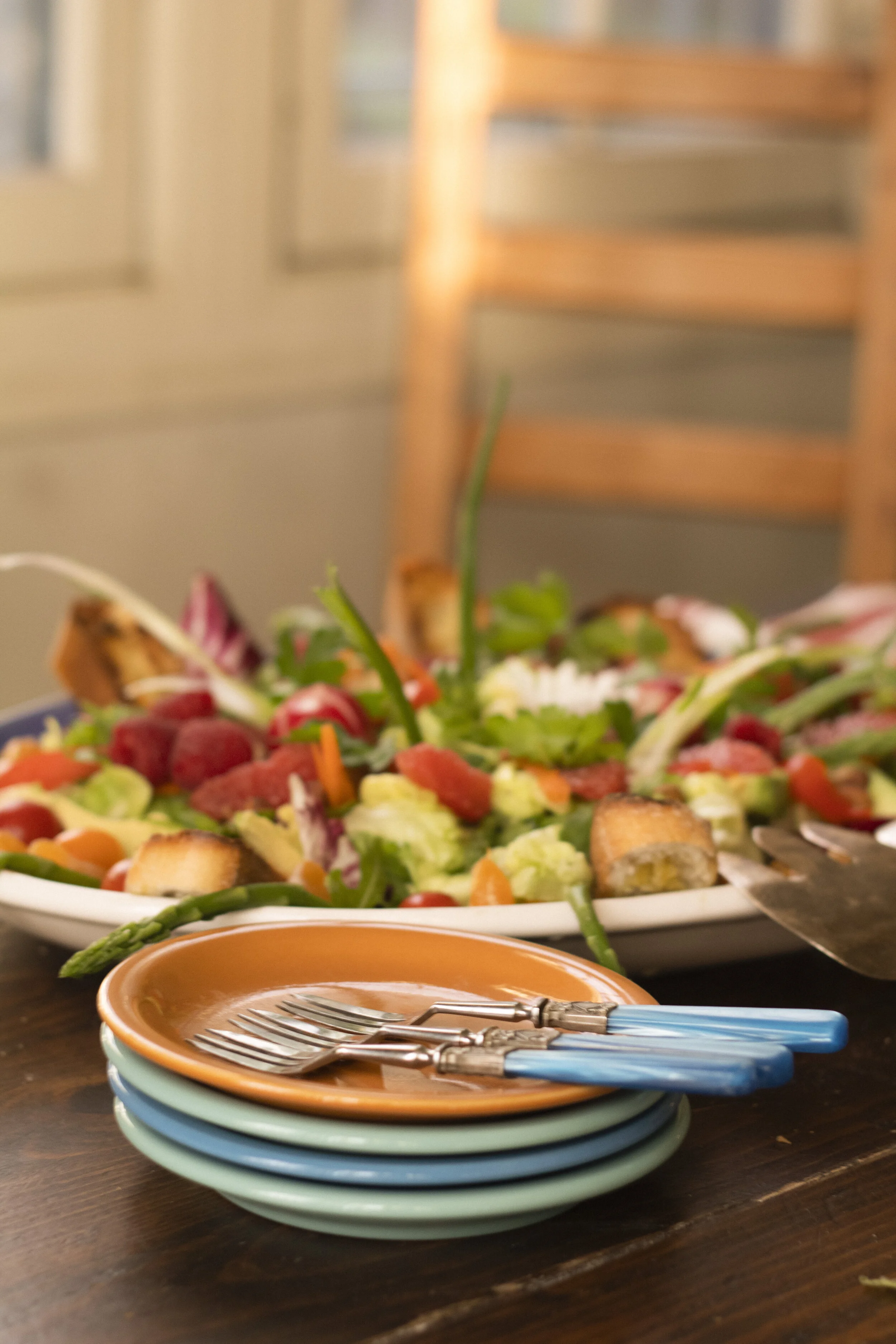
I love home cooking. It’s so much healthier and tastier. This dish was something my grandmother once made from the village I am from. It was a special dish for when we had parties like at a wedding or a 60th birthday or Chinese New Year. Only then could we really sacrifice one of our pigs for the pork.

I like keeping my heritage alive here in the UK and eating the food I had when I was a little girl, it takes me back to Hong Kong. I don’t like some things though - like the snake they cook. Oh, I so don’t like the snake over there. I’ve almost become naturalised here in England. I feel like now, I’m very British.
I’m a country girl, really. I had a cow in my village back in Hong Kong and we would grow everything at home. It was so far away to get to a shop, we’d have to take a boat for 40 minutes there and 40 minutes back. It made so much more sense to grow it ourselves. Then we would collect shellfish by the sea near my home.

I came at 15 years old and didn’t speak a word of English. I didn’t understand anything at school. I wasn’t at a private school or anything. It was just a normal state school and I felt so far behind and found it very, very hard. In a couple of months I hadn’t learned anything so I was enrolled into a language school with lots of other migrant children. I went there with loads of other Chinese as well as Indians. After three years there, I just got going at work. I think I actually learned most of my English working at the Chinese take-away, speaking with customers. I’m terrible at spelling and writing in English.

Grand Dishes is now crowdfunding with award-winning publisher, Unbound. Help us make Grand Dishes and get this recipe when you pledge to make the Grand Dishes cookbook.

Fina, Sicily
Food is so wrapped up with memories, that I like to recreate these dishes as a form of nostalgia for the happy times I’ve had travelling.

FINA
LIVES: Palermo, Sicily
BORN: Palermo, Sicily, 1951
MOTHER TONGUE: Italian
GRANDCHILDREN: Mattia, Samuele, Laura
Pasta con Le Sarde is such a typically Sicilian dish and it’s so simple to make with a very rich flavour of the island. The breadcrumbs to accompany the dish are called ‘Formaggio Povero’ because this once was the parmesan of the poor. It’s also very traditional and I still like to use it instead of parmesan now because it adds great texture to the dish.

What I’m actually best known for amongst my friends is my sugo though. ‘Sugo’ is a traditional pomodoro pasta sauce that everyone here in Italy knows how to make. I’m ‘La Sugara’ amongst my friends because they all want me to make my tomato sauce for them whenever I go to one of their houses. It was the first thing I learned to make and eventually, I learned to make it very well.
It wasn’t always this way though. The first time I tried to make it I was only twelve years old. I tried to cook it without adding water to my saucepan and I burned the pan. At that point in my life, my father had decided I should know how to cook. He just came home from work one day and called me into the kitchen for my first lesson. My parents both worked and my elder sister was married. I was the only girl in the house and my father thought it imperative for me to learn to cook for my brothers.

He was actually the one who taught me how to cook, not my mother. I had to prepare lunch and dinner for my five older brothers every day and so my father taught me very early how to make some classic dishes in order to feed the family. Sometimes my uncle Toto would help too. He lived close by and I’d call him and ask him to come over and show me how to make things. So everything I learned about Sicilian cuisine was from two men, not my mother or nonna, which is usually the case here.
I have never stopped learning new things when it comes to the kitchen though. Whenever I travel to a specific region, I learn a to make a dish from that region. Instead of souvenirs, I collect the typical dishes of each of the places I have visited. I usually ask what ingredients are in each dish, then I come home and get to cooking the dish, experimenting in order to recreate the taste from memory. It’s how I have so many Italian dishes in my repertoire.

For example, I’d never eaten pasta with squid ink before going to Messina and once I’d tried it, I was set on making it at home. As soon as we were back in Palermo, I asked my husband to go out and buy squid then off I went on a mission to recreate it. It wasn’t simple but I managed to get the flavour in the end. In all these years of cooking with this trial and error approach, I’ve somehow managed to hone the skill of perfecting the taste of a dish from memory. It’s so important to keep testing yourself and to keep things interesting. That’s what I like to do in the kitchen. Food is so wrapped up with memories, that I like to recreate these dishes as a form of nostalgia for the happy times I’ve had travelling.
Grand Dishes is now crowdfunding with award-winning publisher, Unbound. Help us make Grand Dishes and get this recipe when you pledge to make the Grand Dishes cookbook.

Ania, Poland
“1974 was the first time I left and went to America. All I was allowed to take with me from Poland was a single $20 US note.”

Ania
Born, Suwałki, Poland, 1931
Mother Tongue, Polish
Grandchildren, Marcin, Magdalena, Karina, Krzysztof, Urszula, Jakub, Michał, Carla, Arthur
They call her, Babcia
I’ve loved being in nature ever since I was a child. We’d venture into the forests of Poland’s Masuria region, famous for its thousands of lakes, and fill two huge pails with wild blueberries from the forest, seal some of them in glass jars and then boil the jars in hot water to make a stash for the winter. The rest we would enjoy in situ while foraging or for lunch that same afternoon with pampuchy (steamed buns), naleśniki (blintzes) or even zupa jagodowa (blueberry soup).
These early memories were amongst the happiest I passed in that place. When World War II arrived, trips to the forest took on a different tone under Nazi fascism. At the beginning, we saw the Germans as good people. I remember in 1941, they stationed soldiers in our house and one of them brought me an orange because he said that I reminded him of his daughter. It got much worse later on, unfortunately.

My father was part of Armia Krajowa (the Polish Home Army), a subversive group of Poles that fought against the Germans during the entirety of the war. My mother was a liaison. Liaisons were undercover women, men, and children without whom there would not have been a Home Army. The AK, made up of men, hid out in the forests sometimes for weeks at a time. They put makeshift explosives on trains, built large weapons and worked with the British against the occupying Germans. I eventually learned that I conspired with the AK myself but at the time I had no idea.
My mother would put notes in my bag and told me to go into the forest and wait under the largest oak tree in a certain field. As I walked into the forest, German officers would ask me what I was doing. My mother told me to tell them, “I’m going to the forest to gather nuts.” I’d then wait under the oak tree and an AK would come running from the deeper forest to get it from me. I wasn’t scared because I didn’t even know what I was doing. I just knew to do as I was told. Many children were used as liaisons, passing reports, tools, and parcels because the Germans were less likely to kill them.

One night, a German came into our house looking for my father. They pushed my mother around with their gun, pinned her against the wall and demanded to know where her husband was. We three kids just started bawling and screeching to the point where the Germans couldn’t handle it anymore. They threatened to shoot my mother but in the end, they let her go, probably because our crying really shook them.
Life wasn’t perfect after the war, but it had to go on, there were children to feed and work to do. We were then under a Russian shadow until 1989 – they drove everything. Before our access to the free market, it was practically impossible to travel out of the country. Food was closely monitored and ration cards were allocated. There were long queues to collect groceries so it was much better to grow our own. We all were curious as to what life was like on the outside. There was a radio station called Radio Wolna Europa (Radio Free Europe) and we listened to it illegally to learn about the democratic world.

1974 was the first time I left and went to America. My cousin Rysia secured a visa for me. I had to receive approval from the government first so my cousin had to write a letter stating that she worked at a travel agency and that she would cover all the costs. All I was allowed to take with me from Poland was a single $20 note.
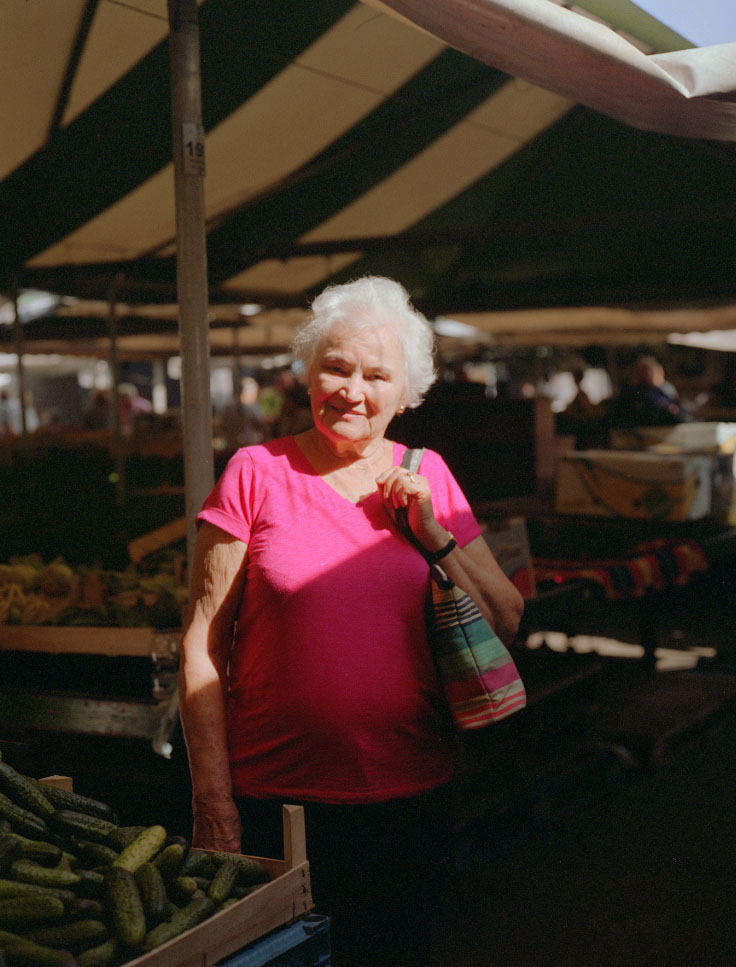
When I arrived, the first thing I did was ask my cousin to take me to a grocery store just to look at the full shelves. I had never seen anything like it. We were so closely monitored though, I wasn’t allowed to bring anything back. On my return, I was interrogated. “Are the Americans slandering the Poles?, What did you do in America? Who were you with? How did you travel around? What did you eat? Who were you with?” are the types of questions they asked me.
When it happened in 1989, we were all ecstatic to finally have democracy. Now Poland is the complete opposite of what it was. It’s beautiful. Food is abundant. We take part in international trade, importing and exporting. We can travel the whole world without limitation.

Clara Maria, Madrid
“It’s so important to have faith in whatever you go into. You must believe in what you do, very much. You have to believe it is going to happen. It’s a question of character.”

CLARA MARIA
LIVES: Madrid, Spain
BORN: Madrid, 1930
MOTHER TONGUE: Spanish
GRANDCHILDREN: Alvaro, Jacobo, Enrique, Felipe, Camila, Primi, Luis, Lorenzo, Guillermo, Eugenia, Jimena, Antonio, Clara, Sofia, Lino, Martta, Isabel
THEY CALL HER: Yaya
COOKING: Escabeche and potato salad

Escabeche is something you can keep for months and you can escabeche anything, from partridge and game to chicken, it’s a popular classic with all the Spaniards. The verb 'escabechar' in Spanish simply means to cook and preserve in vinegar, which I like to do a lot, but using only very good quality Spanish vinegar.
Cooking with vinegar is actually one of the first lessons I taught at the Culinary Institute in New York. I had taken six Spanish chefs with me to deliver a lesson on Spanish cuisine. They were very young and had never been to New York before, so I wasn’t convinced they would make the early start. I said, “Tomorrow at 7am, you are here or I will come and throw a cold jar of water over your heads as you sleep.” They said, “Of course, we will be there,” and of course, they never arrived.

Everyone at the institute was very angry so I took the class myself to entertain them. I taught them how to do a vinegar with Spanish sweet sherry and sweet vinegar. You must mix half a bottle of a very good vinegar, with a bottle of sweet sherry and you leave it to boil until it reduces, then let it cool, and you bottle it again and you have a delicious vinaigrette. Of course I said, “You’re making that vinegar with a vintage that has had 160 years in a bodega and this is a very valuable sherry”. It was 100 times better than the Modena vinegar in America, cheaper and better.
When I got back to Spain, the bodegas behind the sherry and vinegar I had recommended were waiting for me with tonnes of flowers. They said that for the first time in thirty years, they had sold all their stock in New York. It was because I’d taken the class for people who owned restaurants and hotels. I was so amused because I only took the class because the Spanish chefs with me had all disappeared.

Eventually I founded Alambique, a culinary school and shop in Madrid after being inspired by what I had seen of the culinary scene in New York. I was a very good friend of Elizabeth David in London, so I asked her advice when I was thinking about doing it and she was very enthusiastic about it.
All my friends back home were telling me, you’re crazy – what are you doing? We have cooks in our houses, why do we need to learn to cook? The first month, only four people came into our shop but I didn’t mind a lot. As women, we should really trust our instincts. You live with your mind and your heart and you must cook something up that is good with them. My friends were terrified but I wasn’t worried at all because I believed in what I was doing.

I went to see Le Cordon Bleu in Paris, to La Varenne and to the States again because it was a very important market for us. I became a very good friend of Julia Childs’. We were all in the same group of ‘foodies’, as you say now. This was in the 60s and 70s and it was complicated to make friends with people in America and those circles. Those American ladies were all the time, together. They had dinner in their rooms at the hotels. It was so difficult but I knew that I would need to make friends with these ladies to progress in the food world beyond Spain.
The Greeks and the French were furious that they were ignored by the American ladies but I wasn’t so upset. I understood that it was more fun for them to be with each other. One day though, they invited me to join them. I couldn’t believe it! We became very good friends and they helped me pass on my knowledge of Spanish cuisine in the States. It was a great success and a very happy circumstance for me. I enjoyed it a lot.I think one of the best secrets of life is to just be a good person. You receive so much just by being good. You will be very happy.
It’s so important to have faith in whatever you go into. You must believe in what you do, very much. You have to believe it is going to happen. That’s why I made a success of Alambique, because I truly believed in it. It’s a question of character. Sometimes, you do something and you think, “Oh I am crazy, this is ridiculous, I’m going to lose everything.” But if you are sure of what you’re doing, it’s magic. It opens all the doors. All you must do is believe.

Grand Dishes is now crowdfunding with award-winning publisher, Unbound. Help us make Grand Dishes and get this recipe when you pledge to make the Grand Dishes cookbook.

June, London
“I do think it’s funny, as you get older you go out, meet up with the girls, do a little ladies who lunch thing, but I do realise, all we talk about is the things we used to do. I think, ‘well, what about now?’ ”

JUNE
LIVES: Hackney, London
BORN: London, 1948
MOTHER TONGUE: English
GRANDCHILDREN: Marlowe
THEY CALL HER: Granny
COOKING: Beef And Red Wine Pie + Dauphinoise

Bobby my son-in-law is always asking me to make him a pie. I’ve had strict instructions not to make him any more though, because of the weight issue. I’ve been making this as far back as I can remember. I don’t actually remember not making it, but it is a bit of an East London dish.
The area’s been home for so many years now. We lived in Stepney Green when I was a girl and I went to a Jewish school. I actually used to swim for the Stepney Jewish Girls Club. I don’t know how that happened. I even learnt Hebrew.

East London has changed so much though. Broadway Market is disgusting. Gentrification has gone over the top. The locals are all being pushed out and all of a sudden these blocks are becoming luxury areas and no one is stopping it. There’s been a 100% increase on my building now. I’ve no idea where my framing business is going to go. I’m completely blank. It’s such a self-destructive thing that’s happening to London. It isn’t sustainable. It’s so sad.
I’ve been a framer for 25 years now. Before that I had my own recruitment firm. I hadn’t had any training. I just worked as an interviewer for an employment agency and one day I thought to myself, ‘I can do this.’ I had so many contacts, so I took them all with me. Then, when I had the recruitment firm, I saw the guy next to my office had a framing shop. It was so, so different to what I was doing behind a desk. So I learned everything there was to know about framing from scratch and then took over his business.

Oh, and I had a gallery in Belgium at one point too. I’ve crammed so much into this life of mine by doing things! I used to go backwards and forwards with a group of girls to Ostend, this mad clubbing area. It was wild there. I was once in Lille and I was so drunk (I don’t know how I ended up there). There was a puddle and I remember walking through the water with my high heels on absolutely drunk. That’s a memory of getting my feet wet. I don’t think I’ve ever done that since.
I was pretty wild. Another time I was in a bar in Ostend and I said to somebody, ‘Where’s the ladies here?’ They pointed it out, I went on through and saw a ladder. So I climbed it. I went up this ladder right up into the loft. They’d sent me up there as a joke.

It was one of these weekends that I saw the gallery in Belgium was for rent with an apartment upstairs. I thought it might be fun, so I took it on. I’d drive from London to Dover on a Friday night after work with all this art in my little maroon Mini, get on the boat and arrive in Belgium, where all the clubs would be. So of course, I’d go out at about 1am.
I do think it’s funny, as you get older you go out, meet up with the girls, do a little ladies who lunch thing, but I do realise, all we talk about is the things we used to do. It’s all hilarious, you know, like the time we lost Joan in Paris or whatever, but after you’ve done it two or three times, you think, what about now?
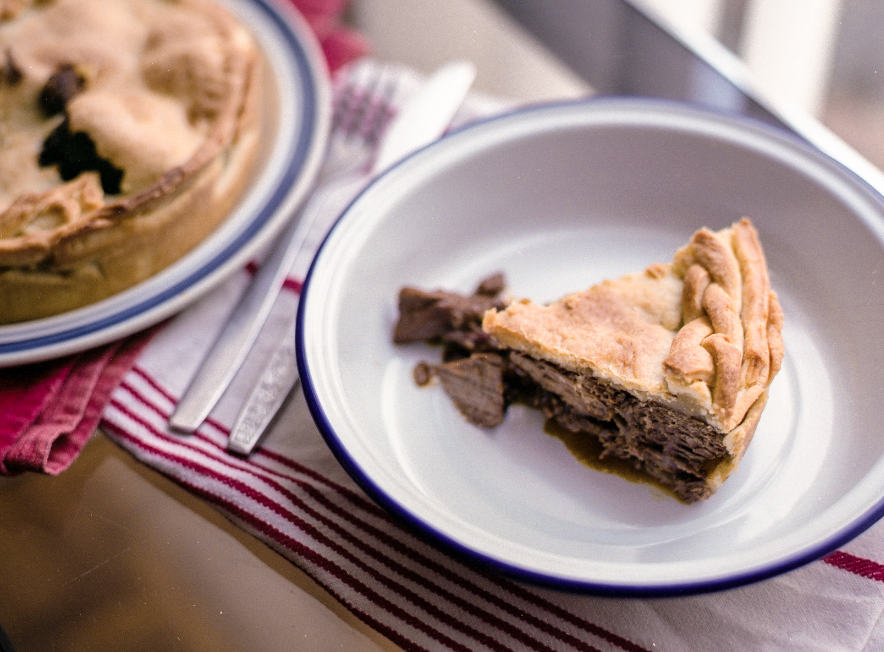
June's pie was made using insanely good steak from The Ginger Pig - our supporter and JUNE's favourite independent London butcher.
Grand Dishes is now crowdfunding with award-winning publisher, Unbound. Help us make Grand Dishes and get this recipe when you pledge to make the Grand Dishes cookbook.

Jenny, Northamptonshire
“I've never bought processed foods - not even biscuits. I make it all myself. I haven’t bought a loaf of bread in 40 years or a jar of jam. I think it’s important for a mum to know how to do all of these things.I even know how to rear and butcher a pig.”

CHAINSAW JENNY
LIVES: Weston, Uk
BORN: Angers, 1941
MOTHER TONGUE: English
GRANDCHILDREN: Millie, Oscar, Cecilie, Ottilie
THEY CALL HER: Granny

I first made this dessert because I was a fan of Mrs Beeton’s cookbook. I went through the entire book and tried every recipe then I started putting my own twist on everything. I make my own jam for the Queen of Puddings and if you look in one of my cupboards, it’s full of my homemade jam.
I’ve done lots of competitions in the horticultural show here. I win the bread competition every year. I've never bought processed foods - not even biscuits. I make it all myself. I haven’t bought a loaf of bread in 40 years or a jar of jam. I think it’s important for a mum to know how to do all of these things.I even know how to rear and butcher a pig.

I had a pig in the back garden and would have it slaughtered in the yard. I learned how to do bacon preserving, sausages and hams. I would have loads and loads of sausages hanging up in the house. I even did Brawn and used the head.
I was neurotic about my children’s teeth and their health in general. I wanted them to have beautiful teeth and be fed well. I think you show your love with nutritious meals. Not just tasty meals, but home made meals. People now are so obese. Don’t they have mirrors in their homes?

I’ve always liked the rural life. They call me 'Chainsaw Jenny' in the village because I have three chainsaws and I'm not afraid to use them. My father had been posted to Nairobi in the army in my formative years and I have lots of memories of being out there. We used to go on holiday to Tanzier right out in the countryside and we’d stay on the farm of a polish nazi escapee at the edge of Kilimanjaro. She’d rescue birds and she’d let me go and feed them every day.
I've always been maternal and I tried hard to be a different mother to my children because I didn’t have a good childhood or a great relationship with my own mother. She never bonded with me so I made a special effort to bond with mine. I never went to work. My mother worked into her 70s.
I left home as soon as I could. My husband, Iver Wilde, was older than me by 15 years. I worked on his farm as a dairy maid and he was married. It was very rare back then but we had an affair. He made the first move and kissed me, which was very unexpected because I was in the cow shed milking the cows at the time. He was the first and only man I have ever been with and he was married to someone else. We couldn’t well meet in his house, so until we married, it was the hay shed. Wilde by name, wild by nature.

He had 3 children by a previous marriage and I consider them all my own. He was very loving and intelligent and he came from such a loving family. They never rowed. My parents rowed every day and so my brother and I ended up completely neurotic. He really was was the perfect match for me in that sense.
I don’t regret not having a good relationship with my mother. It was never meant to be. She just wasn’t maternal. I felt like she never really wanted me.
When I had my first child I knew I needed to feed my family. When you cook, you want to do it properly, so I decided I would go and take a cookery course. I don’t have so much of a sweet tooth but as soon as I started cooking for the children, pudding came instinctively. I never ate dessert growing up, so I wanted that for my children. There has always been one with every meal ever since. That’s why they call me The Queen of Puddings.

I remember the very first time my dad held my hand I was 13 and we were crossing the road in Nottingham. Once we got to the pavement he dropped my hand and he never held it again. It was the only time I’d ever held his hand. When I saw him before he died all I wanted to do was tell him how much I loved him but I couldn’t. I was too emotionally stilted. I’ll always regret it but it’s the way I was raised. As my mother said, ‘we’re not a kissy family.’
Grand Dishes is now crowdfunding with award-winning publisher, Unbound. Help us make Grand Dishes and get this recipe when you pledge to make the Grand Dishes cookbook.

Nicole, France
“I think the key has been to listen and to always talk. Everyday you can turn to the other person and tell them it’s over, the hardest thing to do is to decide that it’s going to work and that you’ll make it work."

NICOLE COINTREAU
LIVES: Angers, France
BORN: Angers, 1958
MOTHER TONGUE: French
GRANDCHILDREN: Eleanore, Emma, Louison
THEY CALL HER: Grand Maman
COOKING: Tarte Oranges

"My grandmother used to make this orange tart. It’s her recipe and I learned to cook it in her kitchen with my twelve aunts. It was always such a busy kitchen.
I was raised by my grandmothers. They’d always say, 'keep your husband by cooking him good food.' When I married François (Cointreau) I started adding Cointreau to the recipe as a sort of new twist on the classic. Most families in this region of France have a bottle of Cointreau in the house though, so it was hardly a drastic change to the traditional tart.
I first met my husband at a party. We were only 17 and it was a soiree for society children, arranged by our parents so we could meet other children from ‘good’ families, as they would put it. On one occasion, there happened to be a power-cut and a friend began playing piano in the dark. I was sat next to François and he turned his head as I turned mine. That was our first kiss. I had a feeling then that he was the man I would marry.

I remember we both had a Solex – a kind of bike with an engine – and we’d ride out next to each other on them and try to kiss. On one occasion, our front wheels touched and of course we ended up crashing. The break wire snapped on my scooter and whipped me across the face. My parents were so scared I’d be scarred for life they sent me to the village soothsayer who put calla lilles marinated in alcohol on my face every day for months. I don’t have a single mark on my face now.
Three weeks after we met, my father tried to scare François off by saying I wouldn’t be given a dowry. My parents were so worried I was too young for a boyfriend that they sent me to boarding school in England. Of course, François waited for me.

When we married we went to see a priest and the priest told us to always agree in front of our children. We have always followed that advice. After thirty-four years, we understand each other. We know what the other’s thinking. I think the key has been to listen and to always talk. Everyday you can turn to the other person and tell them it’s over, the hardest thing to do is to decide that it’s going to work and that you’ll make it work."
Grand Dishes is now crowdfunding with award-winning publisher, Unbound. Help us make Grand Dishes and get this recipe when you pledge to make the Grand Dishes cookbook.